

What will a roadside freight inspection look like when transport information is provided electronically?
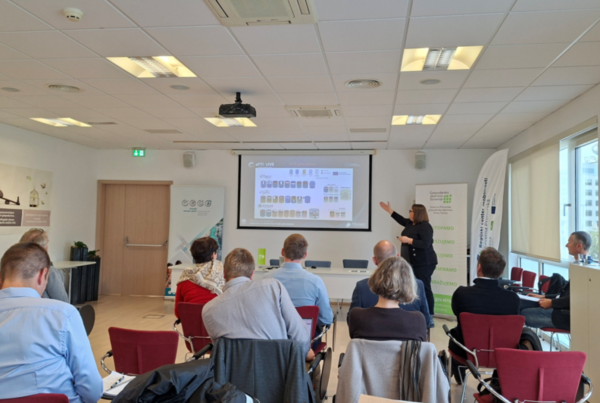
Spain’s Ministry of Transport and Sustainable Mobility addressed this question during the DGTT09 training course held from 5 to 9 October 2026. Organised by the Ministry’s road and rail transport inspection directorate, the five-day course was attended mainly by representatives of regional authorities responsible for enforcement and controls in road freight transport.
The course covered the legal, financial and operational rules governing road freight, with a dedicated focus on electronic Freight Transport Information (eFTI). That part of the training examined what the implementation of eFTI will mean for regional authorities and how inspectors can access the information they need during a check. It approached the topic from the perspective of the people who will use the systems in their daily work.
Participants were introduced to the legal framework and to the data models that support a common approach across EU Member States. The training explained the roles of eFTI Gates, Authority Access Points and the applications used by competent authorities. It also covered how identifiers allow an inspector to find the transport information associated with a specific consignment and how that information is exchanged between systems.
The course walked through a roadside inspection using a QR code. This example tied the technical architecture to a familiar task. During a check, the inspector needs to identify the consignment and retrieve the relevant information. Following that sequence helped show where the Gate, the authority’s application and the underlying data exchange each come into play.
The training also covered the technical requirements for eFTI platforms, including conformity assessment, certification and testing. These topics gave participants a view of the steps involved in preparing the platforms that will make freight information available for official controls. The course placed Spain’s national work in this context by presenting the integration of the Spanish eFTI Gate with the SIMPLE platform.
The programme also introduced eFTI4EU, eFTI4ALL and eFTI4LIVE, connecting Spain’s training and implementation work with the pilot projects supporting eFTI across Europe. For regional authorities, the course linked the European rules and technical requirements to a practical responsibility they already carry out. It gave enforcement staff a way to work through how an electronic check is expected to function, from identifying the transport operation at the roadside to accessing the data needed for the inspection.
Download the slides on eFTI Platform and eFTI Gate (spanish only)